bunker is an architecture and research studio based in Milan
x

20146 milan
via marchesi de’ taddei, 4
+39 02 97750564
studio@bunker-arc.it
@bunker.arc

2018

Hadrian's Villa

Tivoli

Italy

Institution

client
Piranesi Prix de Rome 2018
designers
Politecnico di Milano
AUIC School – ABC Department
‍
University of Parma
Department of Architecture and Engineering

Coordinators:
Michele Caja
Interchange hub, the Water Plaza and Propylaea Plaza (south/east side); Archaeological Village (with Sotirios Zaroulas)

Martina Landsberger
The Canopus area and Antiquarium

Carlo Gandolfi
The congress center and the three hotels; Propylaea Plaza (north side)
Together with Atelier De Molfetta & Strode, they jointly agreed on the landscape design for the Tivoli Park and the Aniene riverfront

Design team: Michele Caja, Martina Landsberger, Carlo Gandolfi, Sotirios Zaroulas, Bunker Arc (Roberto Molteni and Matteo Donghi), Atelier De Molfetta Strode (Federico de Molfetta and Hope Strode)
Consultants: Alessandra Valentinelli, Lilia Palmieri, Maria Vittoria Capitanucci
Students: Zhichao You, Jiahe You, Alberto Gatti, Riccardo Piconi, Giuseppe Miotto
design
preliminary
schedule
2018
publications
“Piranesi Prix de Rome Progetti per la Grande Villa Adriana”, edited by L. Basso Peressut, P.F. Caliari, in edibus Accademia Adrianea Edizioni, Verona 2019, pp. 280-295. ISBN: 9788897221586.

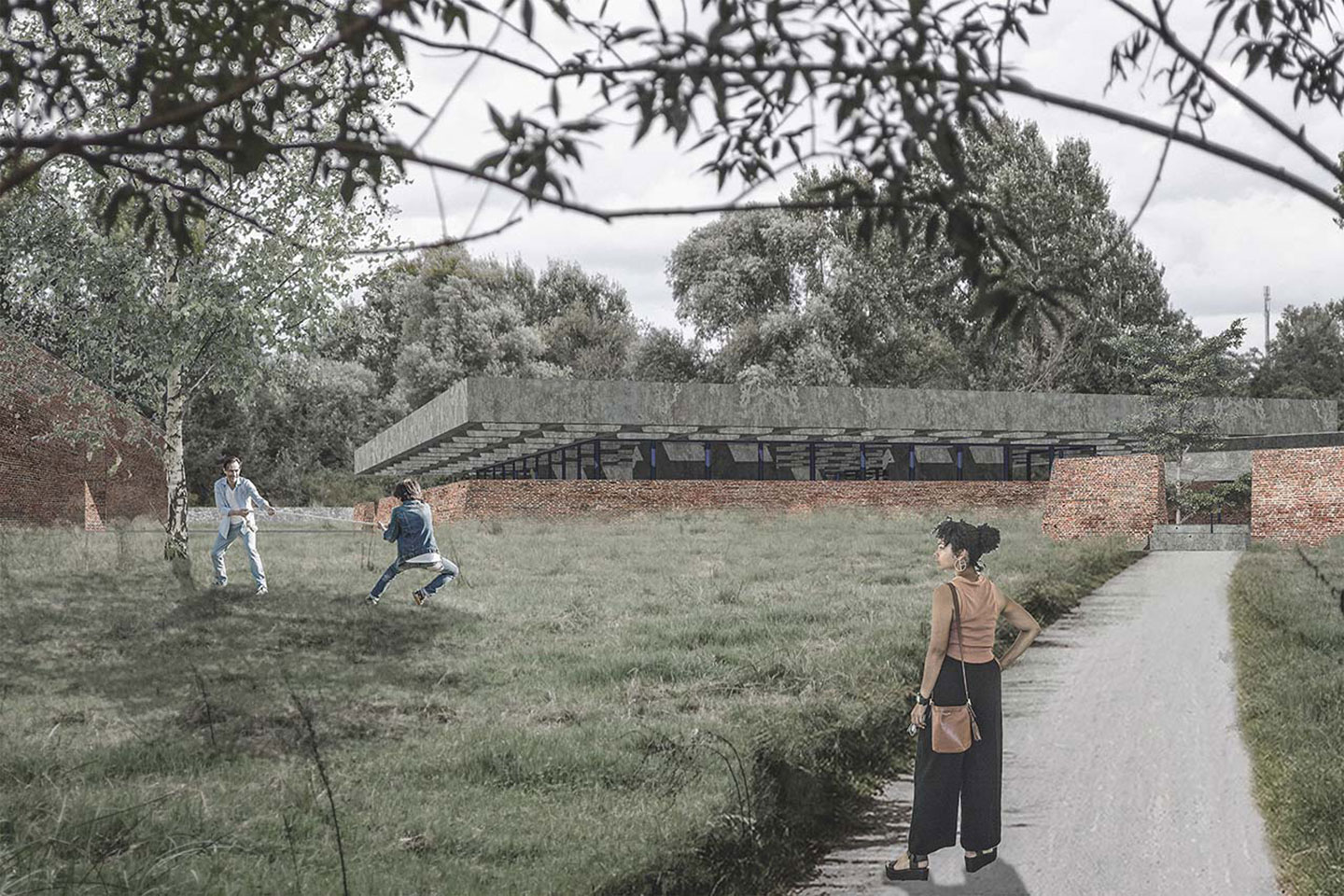
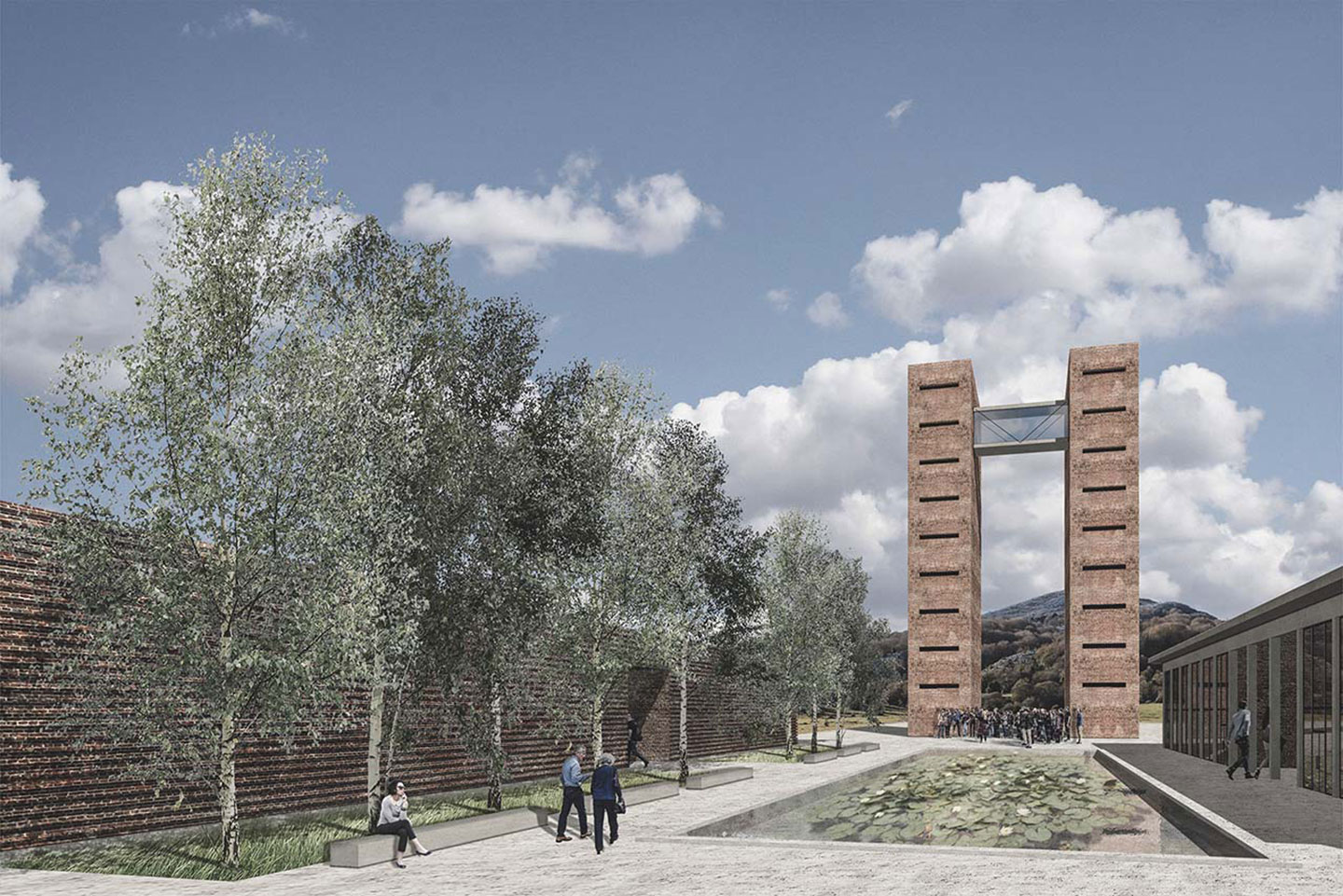
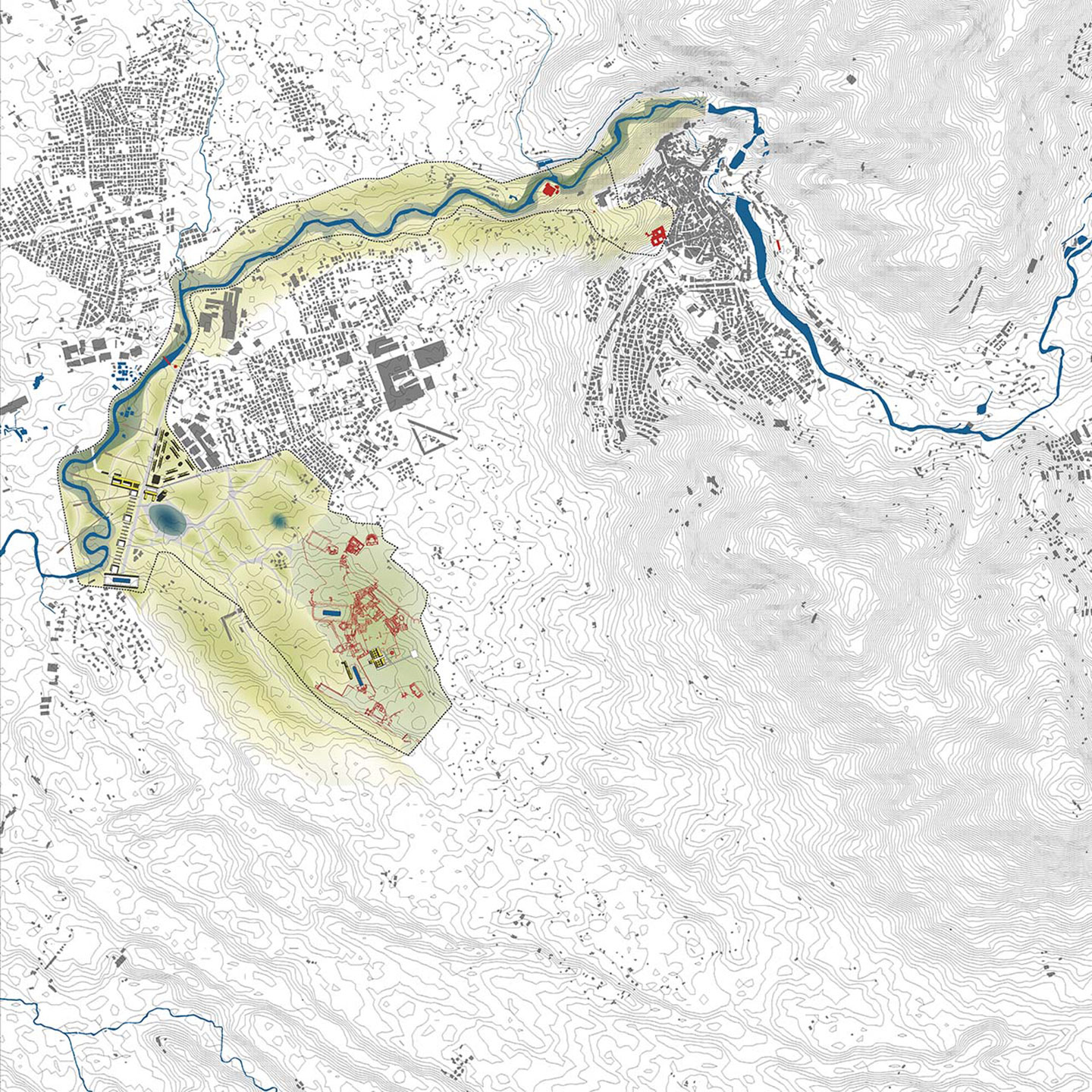
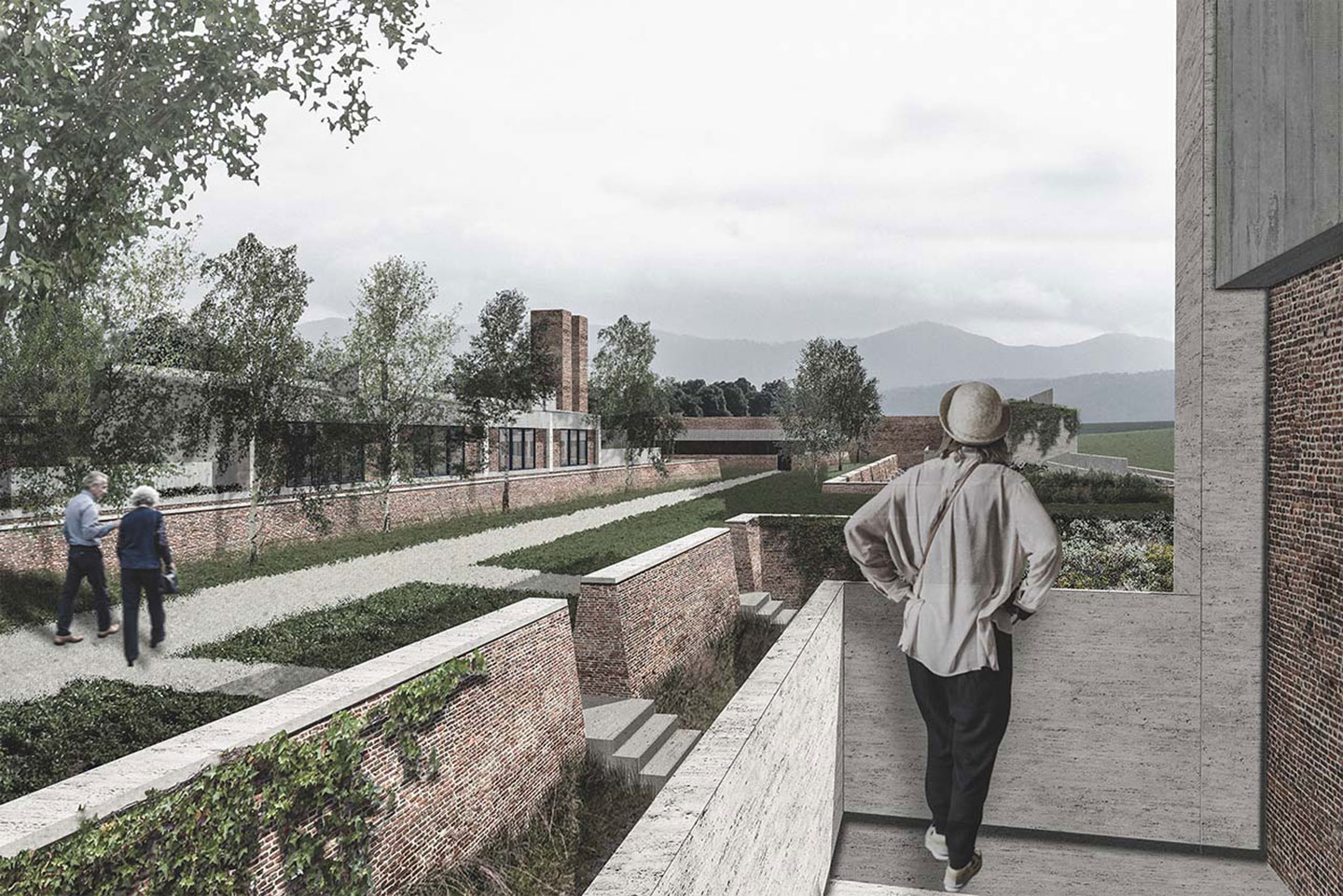
The project interprets the Tivoli landscape as a complex ecological and historical system, where biodiversity, water, and human presence have layered over time. The strategy aims to strengthen the environmental resilience of Villa Adriana, enhancing the role of the Aniene river as a primary ecological corridor and reconnecting the river to the park. The restoration of the Mausoleum of the Plautii at Ponte Lucano involves restoring the historic riverbed and returning areas to their natural floodplains. A linear park is grafted onto this environmental infrastructure, connecting the new entrance of Villa Adriana to Villa d’Este, accessible on foot, by bicycle, or on horseback. Finally, the buffer zone is designated for nurseries, orchards, and research activities, featuring a study center for the conservation of endemic species and local agronomic traditions, establishing the territory as an open laboratory for the protection, study, and enhancement of the landscape.